Reviews and comment from the Demon Crew - creative writers at De Montfort University, Leicester.

Tuesday, 5 March 2013

I overheard a rumour about free wine

The final event I attended was the East Midlands launch of Overheard: Stories to Read Aloud and despite what you may suspect, I didn’t go just for the free wine. 

(Although that was a fantastic bonus! I advise the powers that be to supply free wine at all future events. Maybe some whiskey too...) 

I may have digressed...

The book was edited by DMU Creative Writing tutor, Jonathan Taylor, and contributed to by our other tutors Kathleen Bell, Will Buckingham and Simon Perril, among many others. Although I was sure the other writers would be excellent, I was most interested to hear my tutors’ work. Of course, it did not disappoint.

The idea of stories written for the purpose of being read aloud took me back to telling ghost stories, by torchlight, as a child and ‘story time’ in primary school, gathered in front of the teacher. It reminded me of what first excited me about stories - the facial expressions for emphasis; the whispers and the shouts; the pauses that feel eternal and the look of intrigue in the listeners' eyes. That strength of suspense, humour and involvement can’t be matched when I read text from a page.

The writers brought their stories to life and it was easy to see that the audience was hanging on their every word as the wine stood, neglected, at the back of the room.

If you missed the event, don’t miss the book!


Hannah Maggs

I want to know more

As I sat on a chair swirling a glass of wine in one hand as the audience flooded into a crowded room,I felt privileged that I had experienced De Montfort University's Cultural Exchanges Festival and the range of extraordinary individuals who had come to share their valuable work . 

The final event, 'Overheard -Stories To Read Aloud,' was no exception as a host of readers provided an evening of entertainment. There was a range of stories.  Particularly memorable was Will Buckingham's snippet of an anecdote about a bizarre event witnessed by a couple of honeymooners.  The stories varied widely in theme and topic ranging from mental illness to the transition from childhood to adulthood brilliantly told using the theme of students and teachers.

As I left the artificial lights of the cramped room, I felt as if a piece of each story that had been read aloud had left a long-term effect upon my mind.  Each story, perfectly told, gave an insight into the lives of the characters involved.  I walked into the darkness wishing I could only know more about them all. 


Mike Payne

Inspiration comes with free juice

When I tell people my degree is in Creative Writing I can tell from their expressions (and words) that they imagine us all sitting around on beanbags, flowers in our hair, talking about how totally deep our poems are, man. They have no idea how much craft, research and painstaking editing goes into the work we do. 

How I wish I could have taken all of these doubters to see the work of third year and postgraduate Creative Writing students at today’s Demon Crew event and the Postgraduate Creative Writing Showcase earlier this week. 

The talent I saw made me more proud of my degree than ever. Seeing where I could be in a few short years was as inspiring as it was daunting.

The postgraduate work was of an insanely high standard, my favourite piece was a hilarious, enthusiastically-read extract from story that reminded me a little of Hunter S Thompson’s work. There was also funny and thought-provoking poetry at a standard I'm certain I could never reach. 

The Demon Crew event was a presentation of third year publications – small books, websites, vlogs and audio drama were among the creative ideas showcased. Many of which got a lot of laughs. (There was also free juice and crisps!)

These events have inspired me to push myself so much harder in the hopes that soon I will be up there reading out my work for some poor first year to write an inadequate blog about.


Hannah Maggs

Skimmed

Described as a “performance lecture”, The Price Of Everything is a piece of theatre, a lecture and a stand-up show all spliced together to form a unique one man show with the articulate and intelligent Daniel Bye at the helm. It’s like a collaboration between Al Gore, Stewart Lee and a local dairy farmer. If the performance was milk it would be skimmed, as there's not an ounce of fat in the whole hour. 

The show was post-modern and deconstructive, exploring the manipulation of audiences as well as the concept of value. A glass of milk became the currency of choice as Bye explored, well, the price of everything. Using a mixture of surreal allegories and hard facts, Bye delved into the world’s idea of worth and what our society values with a charm and likeability which made these complex ideas thoroughly accessible.

There was also a degree of self conscious satire as Bye demonstrated the callousness of the Conservative government and free market capitalism. The show ended on a tale espousing the need for kindness, even just the smallest, tiniest bit of kindness, which was reminiscent of Danny Wallace’s Join Me movement.    

Bye aimed to plant a small seed in the audience’s minds, only time will tell if he succeeded but you can see the progress being made here.
 

Matt Watts 

A third of a pint of milk

'The Price of Everything' was Daniel Bye's performance lecture about the value of things.

Having never been to a performance lecture I found it an odd experience to be part of; however it was also highly engaging. In the first half of the performance, as audience members we were thrown into the factual world of worth. How much are we, as human beings, worth, and what value do we place on the world around us? 
 
The second half consisted of a story telling us how much kindness is worth - and how it is that we find it much easier to believe a story about a bunch of idiots buying nothing, than a long continuous chain of kindness.

Completely bewitching, as well as prompting us to think about our actions as people, Daniel Bye is one definitely worth seeing. If the effective metaphor of milk throughout doesn't sway you then the free glass of milk may. An extraordinary experience.

 
Suzi Woolley

All change for creative writers


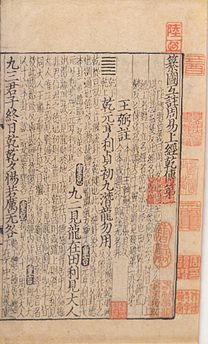
Writers Alan Baker and Will Buckingham have both been prompted to write by the ancient Chinese text the I Ching, also known as The Book of Changes.

Will, began by explaining the mathematically-derived structure of the I Ching: how the 64 hexagrams are formed by either Yang (solid) or Yin (broken) lines stacked in sixes, to represent all the possible combinations. Each of these hexagrams is a statement that can be used for the purposes of divination, or taken and applied as a philosophical perspective.

Alan highlighted - and it really struck me - how contemporary the concepts of I Ching are.  He described it as similar to, and even influential on New Age spiritualism; as well as a key influence on the development of the binary system.

Both Will and Alan, read some of their own work directly inspired by their reading of the I Ching.  Although both started from the same place there were remarkable differences between Alan's 256-word prose poems and Will's short stories.  However both had similar elements, being in their own ways random, circular and cryptic.

Listening to Will and Alan's account of the I Ching, I couldn’t distinguish whether what I was hearing was a mass of convoluted nonsense, or a universal truth delivered with subtle poignancy. Sitting here reflecting, twenty wiki tabs deep, with tired eyes and a head full of whirling thoughts; I’m still not sure. In can at least conclude that the I Ching is a marvellous and seemingly inexhaustible source of food for thought.


Xavier Cranwell

Are women animals?

Thursday saw Joanna Bourke give an insightful talk about the historical relationships between human and animal rights based around her latest book, What it Means to be Human.

She began by reading from a letter to The Times newspaper written by ‘An Earnest Englishwoman.’ This 1872 letter asked the surprising question, "Are Women Animals?" The author acknowledged that women were unlikely to be granted equal rights to men so suggested instead that women's right to live without undue suffering might be advanced if, in henceforward, all laws against the mistreatment of animals were understood to include women in their scope.

It's hard to to believe now, but it was once generally held that 'lesser beings' - a category which could include working-class people, most foreigners, women and children - could not feel or suffer in the same way as white men. In addition, there was a strong belief that a man should have the right to do as he wished in his own home - and that the law should not normally intrude on his treatment of members of his household.

Interestingly, in 1884 children gained the protection women asked for but a man’s wife still had fewer rights than his pig. Joanna also informed us that animals were only protected against cruelty to safeguard humans, as law-makers feared that callousness to animals would seep into their other interactions. Abuse against women and children, however, was not of much concern.

Fortunately, the Earnest Englishwoman’s letter contributed to the humanisation of women and, eventually, the rights we have today.

Joanna looked at many theories of the time and gave concise, researched analysis. She went on to question religious ideas about humans and animals as well as philosophical notions such as how we and other animals are ranked in the universe.

Joanna’s talk was intensely interesting throughout while still remaining accessible to someone who knows little of her field. My only complaint is how quickly the hour seemed to pass!


Hannah Maggs