Reviews and comment from the Demon Crew - creative writers at De Montfort University, Leicester.

Showing posts with label history. Show all posts

Monday, 25 February 2019

How fabric changed history

As someone who has worked in textiles I am fascinated by the structure and history of fabrics. How have we come to the modern day man made fibres we take for granted?  Where did it all begin and how has the histroy of fabric changed us as a society?

Kassia St Clair's talk at 2 on Tuesday 26th February picks up some of the themes her book The Golden Thread. You may have heard it serialised as book of the week on BBC Radio 4.


Visit the website to book, then come along to Room 3.03 of De Montfort University's Clephan Building.

Its free!


S J Brown


Tuesday, 6 March 2018

Germans in India: for converts and trade

Panikos Panayi's talk about the 'Germans in India' taught me something I never knew before. His focus was on German influence during the 18th and 19th centuries - and this really interested me.

Germans travelled for many reasons: some were missionaries while others were merchants or businessmen. The good relations businesses established have helped shape gloablisation today.
 
However Panikos Panayi also emphasised the role of missionaries who spread the teachings of Luther and the Lutheran church through the Basel Mission. Missionaries described their journeys throughout India as they sailed on boats to secure converts. Herman Gundert was an important figure during this time and he went back and forth to India. To do his mission he learnt the local languages such as Hindustani and Bengali.
Herman Gundert
Prof. Panayi's talk made it clear that the German presence in India was very different from the British presence. His talk has made me keen to find out more about this history and explore the different ways in which India as been affected by different European countries - and how those effects are still evident today.
E. Hussain

Tuesday, 1 March 2016

From ignorance to inspiration

Who wants to go and listen to someone talk about an obscure Bosnian hotel for an hour? 
 
Lots of people, apparently, since the room for the talk on an obscure Bosnian hotel was packed. And for good reason, since the talk was incredibly interesting.
 
It was a treat to hear Dr. Kenneth Morrison telli anecdotes about several hotels during war/conflict before talking about the Holiday Inn in Sarajevo during the Bosnian war. For the audience it was fascinating, and for creative writers like myself, the talk was a source of inspiration. The way Dr. Morrison told stories of members of the press in a hotel during these conflicts made it sound almost like a intense movie. 
 
And if my praise still hasn't convinced you, and you're still asking the opening question, then I ask you this: why are you still reading who a blog post about  someone listening to someone else talk about an obscure Bosnian hotel for an hour?

Adil L

Hotels in Hell

The History of the War Hotel was certainly an interesting lecture. Kenneth Morrison talked about the uses of war hotels in times of conflict, and the impact they had on people. A hotel could be a place for strategic/military assets, a place where the press/media could set up base, and a sanctuary for people in general.

It was particularly shocking to find out that the Hotel Europa in Belfast, had the misfortune of being bombed 33 times during 1971-1993. However, this almost caused the place to become a symbol of survival, and the hotel itself employed both Catholics and Protestants.

Grand Hotel, Brighton, was also targeted on one occasion, when Margaret Thatcher was among the guests, in attempt to cripple the government. Five people were killed and thirty-one injured but Mrs Thatcher escaped unhurt.

The Holiday Inn, Sarajevo, known for being painted yellow, was said to have been built on land deemed as “cursed”. It too had its fair share of hell.


Dominique Slatter

Sunday, 28 February 2016

People are people


photo by: Mstyslav Chernov: women and children among Syrian refugees
at Budapest Keleti railway station, 4 September 2015 (wikimedia commons)
 

At a time when the refugee crisis is at an all time high, it is important to be aware of just how often fellow human beings have been forced to choose between leaving their dangerous homes or facing the treacherous seas on the journey to a new homeland. 

After reading last night that new refugees arriving in the country are being forced to wear red wrist bands at all times (bearing a striking resemblance to something that happened during the 1940s, perhaps?), I knew that I needed to improve my understanding of what is truly going on. These are human beings above all else, and should not be treated any differently to the rest of us. 

With so much tension in the country, I couldn't forego the chance to listen to four De Montfort historians sharing their research with the public.

Having already primed myself with facts on the Labour party, the cost of a warhead and the teachings of Islam to argue with my Conservative father, I can't wait to pick up more fuel for thought to fire off when I return home the next day for my birthday. 

There are still a few seats available, and you are welcome to come along to De Montfort University's Clephan Building (Room 0.01) at 5pm on Tuesday 1st March to allow yourself to be further educated on this issue.


Georgia Chenery

Tuesday, 5 March 2013

Are women animals?

Thursday saw Joanna Bourke give an insightful talk about the historical relationships between human and animal rights based around her latest book, What it Means to be Human.

She began by reading from a letter to The Times newspaper written by ‘An Earnest Englishwoman.’ This 1872 letter asked the surprising question, "Are Women Animals?" The author acknowledged that women were unlikely to be granted equal rights to men so suggested instead that women's right to live without undue suffering might be advanced if, in henceforward, all laws against the mistreatment of animals were understood to include women in their scope.

It's hard to to believe now, but it was once generally held that 'lesser beings' - a category which could include working-class people, most foreigners, women and children - could not feel or suffer in the same way as white men. In addition, there was a strong belief that a man should have the right to do as he wished in his own home - and that the law should not normally intrude on his treatment of members of his household.

Interestingly, in 1884 children gained the protection women asked for but a man’s wife still had fewer rights than his pig. Joanna also informed us that animals were only protected against cruelty to safeguard humans, as law-makers feared that callousness to animals would seep into their other interactions. Abuse against women and children, however, was not of much concern.

Fortunately, the Earnest Englishwoman’s letter contributed to the humanisation of women and, eventually, the rights we have today.

Joanna looked at many theories of the time and gave concise, researched analysis. She went on to question religious ideas about humans and animals as well as philosophical notions such as how we and other animals are ranked in the universe.

Joanna’s talk was intensely interesting throughout while still remaining accessible to someone who knows little of her field. My only complaint is how quickly the hour seemed to pass!


Hannah Maggs

"A house full of snakes and scorpions"

As an ex-history student, I still have a passion for history, especially episodes that are often ignored in history lessons.   Matt Carr's talk, which drew on research for his recent book, enlightened his audience about the attempt to purge Muslims and their descendants from Spain in the early 17th century.  
 
This illustrated talk most surely delivered. Matt began by giving general information about the beginning of the purge, before going into detail as to why it happened, and the aftermath of the events.  One of the most shocking quotes from the talk was the contemporary Spanish description of the purge as "the agreeable holocaust."  There was nothing agreeable about the sudden uprooting of families who had lived in Spain for generations - and many didn't reach the beaches of  North Africa where the survivors of the purge were dumped.
 
Hearing the story of the arrival of the Spanish inquisition in modern-day Leicester was an enlightening yet disturbing experience, and it lived up and exceeded all my expectations.


Corey Bedford

Friday, 1 March 2013

When history touches us now

It’s not every day you go into a talk learning about a part of history that you have never heard of before or never learnt about in school. Not knowing what to expect, I sat and listened with open ears. 

 Matthew Carr’s book, Blood and Faith: The Purging of Muslim Spain covers a particular time and place in Spanish history, looking at the expulsion of Muslims in Spain near the beginning of the 1600s and how Spaniards of Muslim descent - even though most were at least nominally Christian - were given three days to leave Spanish Territory with the threat of death.Carr also touched on the way Muslims were seen at that time, what happened to them, what their communities were like, King Philip III of Spain and his choices, the wars that were surrounding Spain as well as a closer look on Islam and Christianity. 

The whole talk was very detailed and there was a lot of information to absorb. Ideas were relevant to the way we see religion now, which I feel is especially important. 

When understanding other people’s culture in the past and their way of living, we realise how lucky we are to live in a city with a variety of different cultures and identities where we can work and play together, in a place where we do not have to fight to be free. 


Dayle Corbin

Thursday, 28 February 2013

Monday with Manda

For me, Cultural Exchanges kicked off on Monday when Gary Day interviewed historical writer, spiritualist and former animal anaesthetist, Manda Scott. I was particularly interested in hearing about her research methods as I'd recently written a historically-based short story for an assignment. 

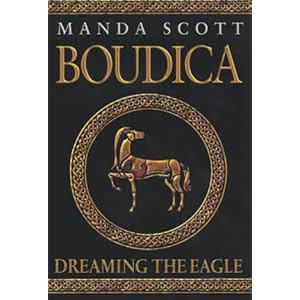
Interestingly, she began writing her famous Boudica series, knowing nothing of Boudica but her name which she spelt wrongly! This was the result of a ‘vision quest’ undertaken when she felt the balance between her spirituality and her scientific mind was uneven and that she had lost her sense of self.

As I'm a sceptic of all things spiritual, I was initially put off by her talk of Shamanism and spirit guides, but her endearing personality and enthusiasm for what she does completely won me over. Scott also has a delightfully rebellious streak which shone through. She couldn't hold back a cheeky grin when admitting that she announced her change from crime to historical fiction in front of her former publisher “to piss her off”. 

This isn’t to say that it’s all fun and games in the life of Manda Scott. She spoke of the hours spent following obscure research trails: learning battle techniques; a night spent in a roundhouse; and learning to make a sword. She then explained the ‘iceberg principal’ that the reader never sees or should see the depths of research undertaken, and I think that's the main point I took away.

All in all, an informative and fun event.


-      Hannah Maggs

Wednesday, 27 February 2013

"because I could"


Manda Scott faced the question every author is asked, "Why did you start writing?".  But the writer of three book series (Kellen Stewart, Boudica, and Rome) gave an answer that surprised us all.  She simply said "Because I could."
 
I expected a talk on how to write novels but the range of Manda's conversation with lecturer Gary Day surprised me.  She was funny but also discussed the spiritual side of her work (she's a shamanist) as well as the unconscious misogyny of male readers, who tend to choose books with male or gender-neutral authors' names.  For her latest series, Manda has become M.C. Scott.  
 
It was a lovely talk.  Manda answered every question openly and directly.  She also stayed behind to sign books and allowed me to take her picture.
 

Corey Bedford

Monday, 25 February 2013

Romans, shamans and a vet

From the blurb for Manda Scott's visit to Cultural Exchanges this year, I have to admit I expected a talk about togas, war, and painstaking historical research; what I got was something quite different.

Manda writes about Roman and ancient Britain. I walked into the room expecting to see someone who mirrored the genre: Imperial. I could not have been further from the truth.

When asked why she wanted to write novels, she just shrugged and replied: 'because I could'.

Sitting cross-legged on the chair, Manda took us conversationally through her history as a veterinarian, her transition into writing crime fiction, and the spiritual journey that led her to begin writing historical novels. 

Her honesty and humour captivated the audience from the moment she began speaking, and her eloquent explanation of her shamanistic beliefs was met with nothing but awe and respect.

This was an enjoyable, educational experience, and Manda was wonderful to listen to. The only down side was that the hour went far too quickly.

I hope Manda comes back to us next year, and brings with her more anecdotes about roundhouses, hares, and why she dislikes James Herriot so much.


Anneka Mason

Friday, 22 February 2013

When there's no free food, grab the politician (but he's off)

Cultural Exchanges ... my first thoughts were of events from around the world. I imagined myself listening to music from India, watching African dancing and eating large amounts of FREE Chinese and Japanese food.

It was not to be. In the absence of a culinary feast, I decided my best bet would be a book launch and a talk from Rohan Silva, who is a policy advisor to the Prime Minister. Politics is a keen interest of mine. Alas, the talk has been cancelled.
 

The two book launches I've booked look pretty interesting too. Matt Carr's book is about the mass purges of Muslims from Spain from the 15th to the 17th century while American Michael Heller is launching his Collected Poems. Both should be interesting and I'd like to talk to each author about the process of putting a book together.

 The Rohan Silva event would have been right up my street. As for the rest, I guess I'll just mingle and let it sink in. The atmosphere of the week is sure to be good.


Guy J.H Bezant

Slimy stomachs, gruesome battles - and Manda Scott


I have a confession. Recently I've developed a slight obsession with the first century, specifically first century Britain and Celtic tribes and the Romans. So imagine my joy when I discovered Manda Scott, author of Rome: The Eagle of the Twelfth, would be at Cultural Exchanges.

I've written for as long as I can remember, but always fantasy and always involving vampires and elves and princesses. I've never attempted a historical novel; the amount of research needed is daunting and terrifying and makes my stomach feel all slimy!

What better opportunity than to speak with a historical novel writer about her books before diving head first into my new obsession?

I am definitely looking forward to reading Rome: The Eagle of the Twelfth and meeting the woman herself. Hopefully her historical-novel-writing wisdom will sink in and settle the stomach, and inspire me to widen the genre of my writing.

After all, what can be better on Britain's plains than a bloody and gruesome battle between painted Celts and armoured Romans?


Jennifer Ryan

Thursday, 1 March 2012

An impossible objective

Although I knew little about the subject, I found myself enthralled by Professor Richard Evans' talk on Germany losing the Second World War.

Over the hour, Professor Evans detailed Hitler's plans for the world, including the transformation of Berlin into the "World Capital", and the complete domination of Europe and the East. He explained that it was all too evident that Germany's aims were overreaching; the very fact that its plans were limitless ensured that they would never be fulfilled. At the same time this one country was facing insurmountable odds from the combined forces of the British Empire, America and Russia. This led to a fascinating dissection of how it was near impossible for the Germans to have won.

The talk was intelligent, concise and - speaking as someone who doesn'tt know a great deal about the details of this particular aspect of the War- utterly absorbing.


Edward Spence

Why Germany lost

Richard Evans, author of the Third Reich trilogy, begins his talk on World War II in front of a completely packed-out lecture hall. Right from the off, the room is silent with everyone entirely attentive, laughing at every joke and paying attention to every word. We look too, as the lecture accompanied by pictures from the period.

Evans splits the loss into different reasons including the economy. Germany found it impossible to keep up with the production of the British Empire, the USSR and the USA.

As well as this, Evans claims that the aims of Germany were so large they could never be achieved. Hitler was said never to be rational and this came across throughout the talk. As Richard finished there was a large round of applause from the interested crowd.

I'd been looking forward to Richard Evans' talk and I appreciated his raconteur style. It reminded me why I loved history back in my A-Level days.


Grant Cole

Thursday, 3 March 2011

Sex, Culture, Politics

To be quite honest, I had absolutely no idea when the Georgian period was before this lecture. I'm hopelessly, and rather shamefully, clueless when it comes to British history. So I can't really answer as to why I decided to attend this event - perhaps, as Doctor Weller suggested, we were all there simply because the word 'sex' appeared in the title. Nobody argued with that.

The word 'lecture' doesn't really do Toni Weller's talk justice. When you say "lecture" many people automatically think "boring". Yet this was engaging, interesting, well-presented and pleasantly humorous. Whether you were a history and satire buff, or like me, a clueless student, she was educational and interesting in the ideas and themes she presented. The images were well chosen and connected; not once did I feel lost.

I took a great deal of information from this session, and one of the most appealing things that kept the audiences attention was seeing Doctor Weller's passion for the subject. I am definitely glad the title had 'sex' in it - I would never have gained this much-needed historical context without it!


Terri Baker