Reviews and comment from the Demon Crew - creative writers at De Montfort University, Leicester.

Showing posts with label theatre. Show all posts

Tuesday, 6 March 2018

"Learning to write is learning to work" - an hour with Vinay Patel

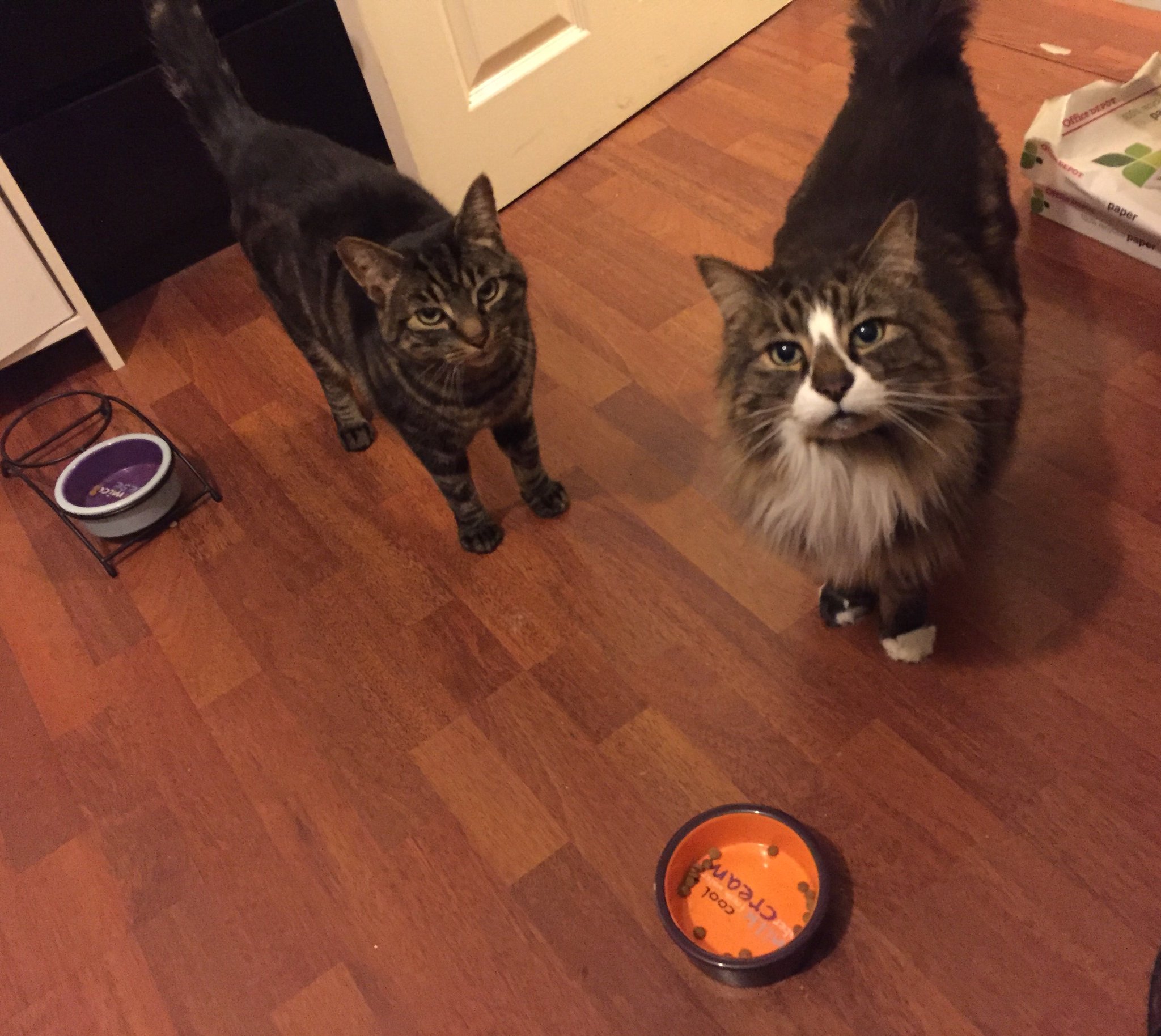
Vinay's cats
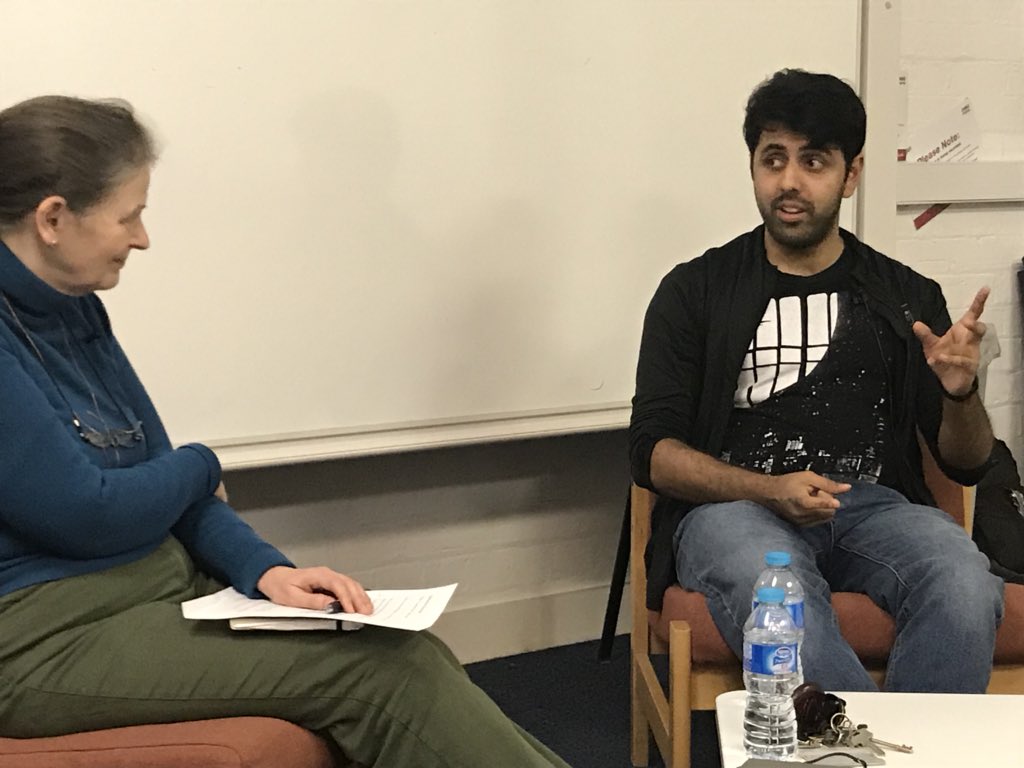
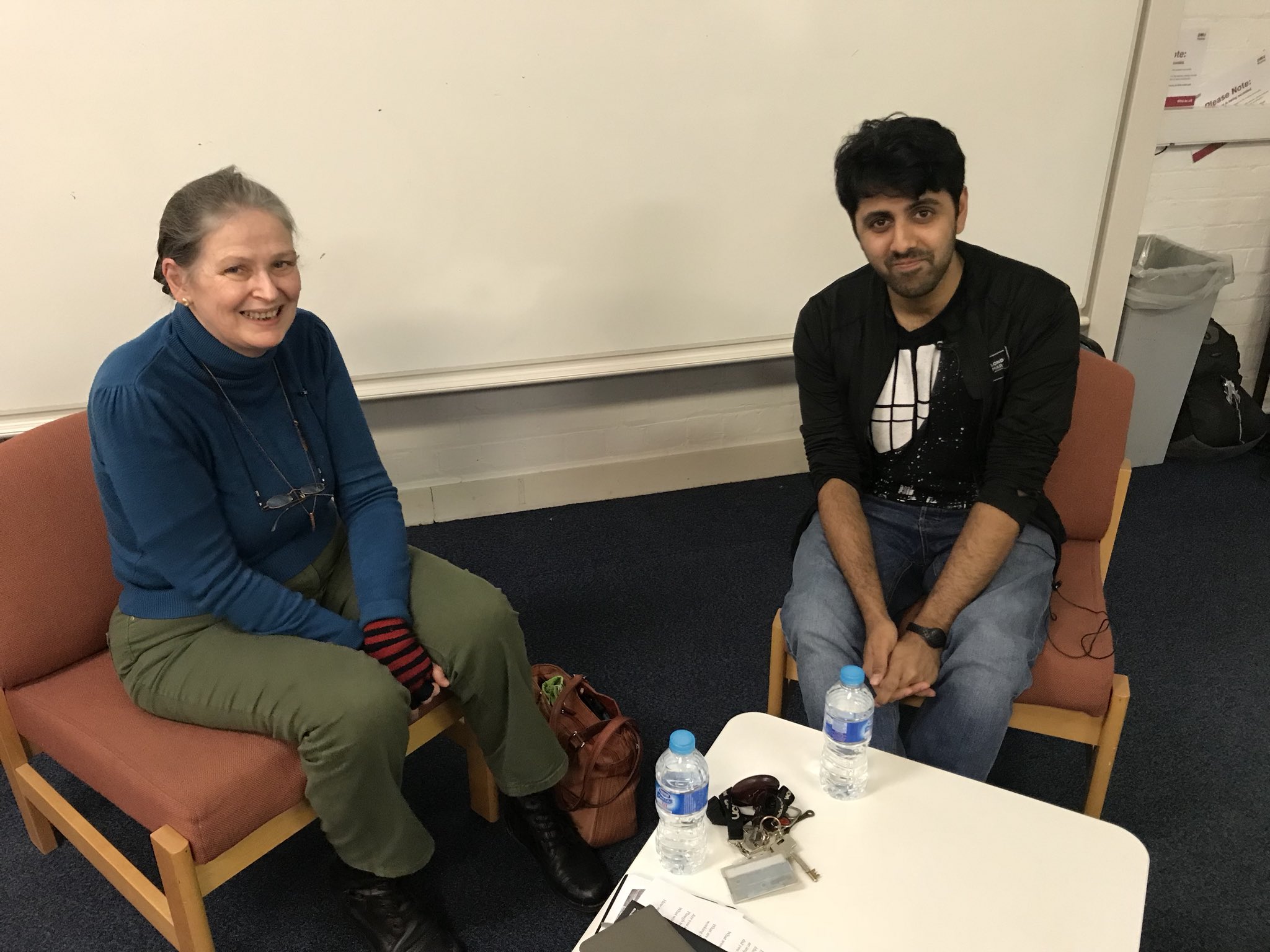
An whole entire hour with the acclaimed screenwriter and playwright Vinay Patel involves a lot of witty humour, personal anecdotes, stories about his BAFTA experience as well as advice and info on how he got to be where he is today. His was a riveting talk with DMU lecturer, Kathleen Bell followed  by questions from a keen audience who were eager for answers.

Patel gave us an insight into his work and how he got to be the successful playwright we know him as today. I have to say that I thought that Patel would be one of those unrelateable, snobby writers who seem near enough 'untouchable'. In actuality he is very down to earth. He admitted struggling with multiple deadlines, joking that "all procrastination is good procrastination" and also told us how, quite unintentionally, he came to be "running a retirement home for cats."

His humour certainly made me certainly feel happy to be at the event, which was also incredibly interesting. He told us about his up and coming ventures which include a touring production for Paines Plough as well as an epic drama, An Adventure, being produced at The Bush Theatre in Shepherds Bush, London. The adventure in question is based on the life of his grandparents who travelled over three continents (from India, to Kenya then England).


Patel also expressed his interest and passion for wanting to create pieces that highlight the talent of minority actors, as well as meaningful stories, like his critically acclaimed drama, Murdered By My Father (BBC, 2016) which tells the story of an honour killing. He also stated that he would love to write something in the sci-fi genre of which he's an immense fan.
 

Throughout his whole entire talk, Vinay Patel made me think about my own writing and the different ways in which I might write. "Pick things that are important to you," he said. I've always wanted to write a script or play and this made me even more inspired. It made me think about not writing about what I think other people may want to see, but instead starting from the issues and subjects that interest me.

Overall, this Cultural Exchanges event has a very powerful effect on me. It was a conversation not to be missed.


Tara N. Lawal

"Theatre is the purest form of expression"

Vinay Patel's appearance at the Cultural Exchanges festival yesterday seemed humble, in contrast to the festival brochure’s picture of him decked out in a polka shirt and blue suit. And that's just what he was, during the talk with Kathleen Bell (a lecturer at DMU): humble. 

Despite making a "meteoric rise" in his career through the BAFTA-nominated drama film Murdered By My Father (2016) he said, "I'm not confident enough in what I do to be more involved" when asked about the process of producing films from his scripts. 

However, he remained confident in his idea of what theatre is and what film is. 

"Writing for theatre is changing in terms of what you can do with it ... when writing for theatre, the main unit of meaning is in a line. But in film, it’s in the juxtaposition of two images." Despite his own comment that this statement was "wanky," I found it refreshingly introspective.

Coming from someone who claims that writing was "the only thing [he] could do" at school, I'd say Patel is certainly meteoric. 

“Theatre is the purest form of expression,” he said in response to one question from the audience. 

His one complaint about the theatre industry is that “it’s dominated by people with lots of money.” He suggested that if this wasn’t so, presentation of characters and topics addressed in plays would be more diverse, and in turn audiences would be more diverse. 

Interested in Vinay Patel’s next play? Coming this September is his ‘An Adventure.’

Book your tickets now for its run at London's Bush Theatre.t the Bush Theatre now!

G.E. Knight
G.E. Knight

Sunday, 26 February 2017

Art for a clean break

I haven't thought much about what happens in prisons. But when I saw an event called Art in Prisons: Clean Break, I booked a ticket, and since then I've been wondering about it more and more. On Thursday I hope my questions will be answered.

More than that, I'm looking forward to hearing about how the Clean Break program uses theatre to work with women who have been through the criminal justice system or are at risk of offending, and, most of all, how it has made a difference to their lives. 


Aimee Carter

Wednesday, 9 March 2016

"Plase give us your imagination"

Each time Willy Russell spoke, whether to make a joke or in reference to one of his plays, the couple in front of us would nod religiously. After a while, we nodded in perfect time.

Nodding at the discovery that Blood Brothers had been toured in Japan, Australia and the UK. Nodding at the idea that “playwrights need to make mistakes” when they’re writing in order to grow.

Willy taught us that scriptwriting is a collaborative process between scriptwriter, company and audience. You need the imagination of the audience, to capture it and roll with it.

What was impressive was the different jobs that he had before he did scriptwriting, from hairdressing to teaching, showing that anything can happen if you keep going.

Throughout the question and answer session, the message from Willy was clear. Theatre and playwriting is important and that the only obligation a scriptwriter has is “not to bore”.

Willy, I agree with you.


Jack Wilkin

No disappointment with Willy

When I found out that Willy Russell was coming to talk, I jumped at the chance to meet him.. 
I left my flat in good spirits even though the dark sky threatened another bout of rain. I wasn’t sure what to expect. I couldn’t help but remember the stories friends had told me of how, when they finally met someone they looked up to while growing up, they had been disappointed. 
But I can tell you, I wasn't disappointed in Willy Russell. It was amazing to meet him and to hear talk enthusiastically about his life and career - and this included the stories behind some of his plays. He also read from Shirley Valentine, and told us how one night, when the actress playing Shirley couldn’t perform, he took the role instead.
And after the talk Willy Russell kindly signed my copy of Blood Brothers.


Kathryn Adderley

An evening with the "world's worst hairdresser"

Fresh from a viewing of his play Our Day Out at Leicester’s Curve theatre, Willy Russell created a relaxed atmosphere for all in the filled lecture hall last night. He gave a refreshingly frank account of his life and career from the comfort of his chair, with a glass of what seemed to be red wine at his side.
 
With song-writing, playwriting, and teaching under his belt, the self-proclaimed “world’s worst hairdresser” enlivened the interview with candid anecdotes and hilarious digressions. He also included animated readings from Blood Brothers and Shirley Valentine which were not only inspiring, but entertaining too.
 
My evening off from the dread of looming deadlines was well spent!
   
Based on Russell’s “real-life experience” as a teacher, Our Day Out will be showing from Thursday 28th April to Saturday 30th April 2016, performed by De Montfort University students at the Curve theatre in Leicester.


Jade Woods

Ingenuity and generosity

Willy Russell after his talk with
Shannon Webb
Courtesy of Jack Wilkins
 
Willy Russell knows.There's a stereotype that  those who grow up in lower socio-economic circumstances don't do well in life. But this young council estate lad grew up to be a renowned playwright and composer. of past and present? Stereotypically, those who grow up on lower socially economic backgrounds do not tend to do as well in life. But Willy's working-class Lancashire background aided his exploration and creation of his award-winning plays and novels.

Willy discussed the way his love for reading and writing at school made him look like an alien to the rest of his peers. He spoke about his mother's story telling and his father's dislike of the upper classes. Willy's life experiences impacted showed us that he is a real person, and someone a person like me (from a working class background) can relate to. The audience was in awe.

Through his varied career path - as  factory worker, hairdresser, teacher, songwriter, actor, playwright, composer - Willy always thought about writing. He described how 'shit' he was at cutting hair, yet he was a perfect listener for his customers- something many of us need when having a fresh new trim. Through his varied career paths he said he had always thought about writing.

Obviously I could go on all day about how wonderful Willy was during his talk and interview, but unfortunately I have a word limit. So I will just end by summing up the man I met in these words: Willy Russell, a man of ingenuity and generosity.


Shannon Webb

Wednesday, 25 February 2015

Starring Adrian Mole

 
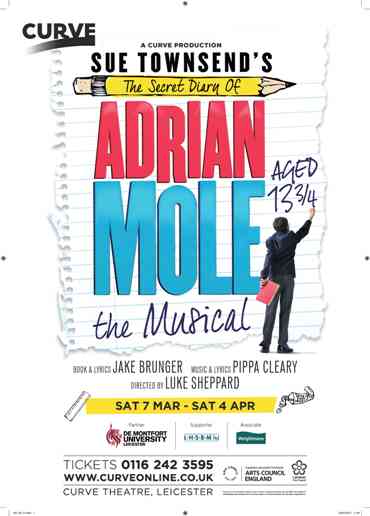
As playwrights Jake Brunger and Pippa Cleary talked about pitching the idea of an Adrian Mole musical, writing the script, finding the right cast and working with the kids, it was clear that both writers had a great deal of respect and admiration for everyone involved with the production.  
When asked about working with Sue Townsend, both Jake and Pippa’s reaction was one of fond memory and lasting impressions. They spoke about trying to capture Sue’s voice whilst writing the script, of keeping the original content and not diverging from the magic of the original books. I found it very amusing to learn that during several meetings, Sue would point out a particular line and announce “I don’t like this one, I don’t think it’s right”, only to be told “but, Sue, that’s one of yours!”
Though many famous people have stated that you should never work with children, those at Curve take a different view. Apparently the hardest working members of the cast are the also the youngest. With school classes, script rehearsals and set management all being juggled at the same time it was a pleasure to hear of how much fun the kids have been to work with.
 ‘The Secret Diary of Adrian Mole, Aged 13¾’, opens at The Curve theatre on Saturday 7th March. I booked my ticket the moment the interview finished.

Daniel Jensen

Wednesday, 29 February 2012

An evening with Murray Melvin

I find myself at something of a loss for words. An hour ago, I had the honour of being able to sit and listen to acclaimed actor Murray Melvin speak about his craft, his experiences and his work with the company, Theatre Workshop.

All grace and elegance, Murray was a pleasure to listen to. There were no words wasted as he covered a wide range of stories, from a humorous recollection of his very first audition with Joan Littlewood, to an emotional encounter at a Doctor Who convention. He also spoke at great length regarding his role as archivist at Theatre Royal Stratford East, along with the history of the building and his many memories of the theatre. His recollections of making the tea for the company, his first role as a messenger in Macbeth and his defining role as Geoffrey Ingham in A Taste of Honey were told with great fondness, as were his many other stories.

He explained his acting techniques originating in Laban, picked out moments of his life and shared his thoughts on the importance of works such as Oh, What A Lovely War!, Murray remained fascinating throughout, regaling us with stories both amusing and upsetting. It was a wonderful evening, and I feel honoured to have been able to be in the presence of such an inspirational, influential and exceptional man.


Edward Spence

Friday, 24 February 2012

Murray Melvin

On Tuesday 28th Feburary from 6:30-7:30, Murray Melvin is coming to De Montfort to be interviewed about his work on both stage and screen.

An actor who has appeared in many different genres, Murray Melvin is a fascinating individual. Nominated for and winning many awards (in particular for A Taste of Honey), he is a highly-respected actor on film and stage. The list of actors and directors he has worked with is eclectic and impressive, boasting such names as Rita Tushingham, Ken Russell and Stanley Kubrick. Above all, he is known for his work with pioneering director Joan Littlewood at Theatre Workshop and is now the archivist of the Theatre Royal, Stratford East.

Murray Melvin has also appeared on TV screens for many years, in shows ranging from The Avengers and Petticoat Pirates to Torchwood In these, as in his stage and film work, he is a distinct and remarkable personality in the world of acting.


Tickets can be booked HERE.

Edward Spence

Wednesday, 2 March 2011

Student convinced to spend money

Now I'll admit, I hadn't really heard a hell of a lot about this playwright before 6 o'clock Tuesday evening. But after just one hour listening to the man talk about his life and career, I can say that David Rudkin may well be one of the most underrated dramatists in post war Britain.

We saw examples of his work dating back to the age of eleven, and the language used combined with the length of the book and the strict editing process taken showed that even at that age it was clear that David Rudkin would go on to great things. These great things were evidenced by the British Library's recent acquisition of David Rudkin's archive - a lifetime of works that took up an entire side of Rudkin's own living room.

The impression made by David Rudkin on me and, I can safely assume many others in the room, was so strong was that it convinced me to part with £19.95 for a signed copy of his book with his two latest plays, Red Sun and Merlin Unchained, as soon as the interview ended.


Alex Thompson

A lifetime's work in Tesco bags

Thousands of pieces of paper, catalogued and waiting in his front room to be taken to the archives in the British museum; this was one of the first photos we were shown during the interview with David Rudkin, as he recounted what can truly be described as a lifetime of work.

I'd never heard of Rudkin before, but I was fascinated by his tales and the vivid images he created. I particularly loved how he described himself at a young age asking his mother how books were held together. When she told him they were sewed, he sat with darning needle and bright red thread, carefully stitching his pages together.

But it’s more than just an endearing story; it shows a dedication and a passion to his craft that is evident throughout his career. It was wonderful to see a writer speak with such high enthusiasm for his profession after so many years - and this is something I hope I will witness again in the future.


Katie Bamford

Tuesday, 1 March 2011

Are we ready for a curtain call?

Michael Billington, theatre critic for The Guardian newspaper took part in this year’s Cultural eXchanges programme on February 28th at De Montfort University, Leicester.

Judging by the packed lecture theatre in the Clephan building, members of the public were itching to see Britain’s longest-serving theatre critic, eager to listen and with a list of questions at the ready.

Though just another face in a large crowd, I felt a part of the interview between Mr Billington and Dr Elinor Parsons as he spoke of his career spanning over forty years and his love of the theatre.

Having started his career with The Guardian in 1971, Mr Billington find his regular reviews in the newspapers now bring him into closer (and faster) dialogue with readers thanks to the internet.

Listening to Mr Billington, I felt my love for the theatre take a new turn as he spoke about the future and how financial cuts could mean fewer people would be able to see live theatre. For him, ticket pricing was crucial; he said if tickets were to be charged at the same price as a cup of coffee, the difference in audience numbers would be immense.

I hope Mr Billington will return to take part in next year’s Cultural eXchanges as his presence was appreciated by not only De Montfort University students, but also by members of the public who travelled to see him in person.


Sophie Price

Magic, memories - not to mention free wine


The night started with free wine and canapés, a sure way to win the heart of any student. After half an hour or so of casual dining and conversation we were ushered into the auditorium for the event proper to commence.

It began with a gentleman reading from his father’s journal, which chronicled his time working in the theatre. So began a remarkable series of personal and deeply-involving tales of a bygone era, interspersed with live performances.

Things took a turn for the surreal though when several clips of variety performances were played. As the film showed a man and his assistant playing xylophone and drums with great enthusiasm, the gentleman two rows in front was tapping his fingers perfectly in time to the music, catching every jaunt and flourish. Then when the compere announced that some of those very performers would talk to us, the finger-tapper was among the small group who made their way to front.

There was an immediate sense of family and connection bewteen all these people had. The man drumming along was the father of the man who had escaped a strait jacket not half an hour before. And when a gentleman stood in the audience and mentioned his father by name, all those on stage recognized that name. The people on stage talked not only to the audience, but amongst themselves, reminiscing of days gone past, and acts and people they knew. Somehow, through all this, they made me feel a part of something that happened fifty years before I was born.

Pictured above Andrew Van Buren during the closing act of the night (picture taken and published with permission from the subject).


Charles Wilkinson

The children of variety

When we think of ‘variety theatre,’ the terms ‘old-fashioned’ or even ‘dead’ may spring to mind. This is really quite sad. In a world where revolting chat shows and exploitative singing contests pass for entertainment, ‘One Night Only’ was a fun and insightful breath of fresh air.

Sue Barber was the charismatic host of the hour-and-a-half show, talking with humour and fondness about her theatrical upbringing. She is what she terms a ‘child of variety,’ being the fifth generation in a family of performers – she has performed herself in an act with her father – and is now studying for a PhD on the subject of variety theatre at DMU.

Guests included Andrew Van Buren, an illusionist who can do amazing things with plates. Another guest read from the diary of his travelling performer father, providing an amusing insight into the offstage life. One entry mentioned a rat eating through his clothes. Glamorous.

The fuzzy pictures and warped soundtracks of the archive footage did not distract from their entertainment value. They were five ‘home-movie’ style videos depicting acts from comedians to stilt walking (Sue Barber herself and her father were featured in one video).

Arguably, variety theatre doesn’t have its place in Britain anymore. However, with performers like Andrew Van Buren trying to keep it alive, it may one day make a comeback. He is apparently very popular in Dubai…

I also never knew Harry Houdini’s real name was Eric Weiss.


Stephanie-Louise Farrell

Question: Is Romeo and Juliet about binge drinking?

The audience at DMU's Cultural Exchange Event 'A Reviewer's Perspective' got the answer: renowned Guardian theatre critic Michael Billington said if the play is good then it can be whatever you want it to be. Shakespeare's work is certainly resilient enough to cope with such interpretations.

I am new to the art of theatre reviews, and admit to feeling a bit odd writing a review of a reviewer, however, I was interested to hear how one of the masters perfected his craft. With forty years service at The Guardian, Michael has sat through some of the best, and worst, of Britain's plays and musicals. That is a lot of interval ice cream.

He is an optimistic chap, and has seen and commented on the many developments in Theatre Land, also the impact of the wider world on this branch of the Arts.

In terms of writing, I feel respect is due to the theatre critic, who, within an hour of curtain call, must submit a complete review, ready for the morning's papers. This review must also be well written. Michael cited his own great influence, the Observer reviewer Kenneth Tynan, who he felt 'wrote with voluptuous style: fluent, witty and combative prose.' That is certainly something to aim for.

Ultimately, Michael's advice to the aspiring theatre critic is to have an overpowering urge to write, and an ability to engage, entertain and express opinions with clarity. Oh, and the small matter of an insatiable appetite for theatre. And ice cream.

Sally Jack

"What do I know?"

Veteran theatre critic Michael Billington took part in a one-hour, open interview with DMU's very own Eileen Parsons in front of a large audience. Topics included why he Mr Billington a critic, a reviewer's responsibilities, the state of British theatre, the effect of the internet on his job and much more.

Mr. Billington came across as a humble and very pleasant person with a good sense of humour, making plenty of witty and comic comments. A personal favourite was his ironic question, "What do I know?" He also seemed to be happy to be answering questions in one the Clephan Building's larger lecture theatres - no wonder the audience enjoyed it.

I hope that the the guest speakers for the rest of Cultural eXchanges are as interesting and engaging as Mr. Billington.

[anonymous]